
Available when it matters
Owning a battery is not the same as earning from it. A device can have spare capacity without being available for an event. The owner's choices, state of charge (how full the battery is), site limits and the connection all change what can be offered.
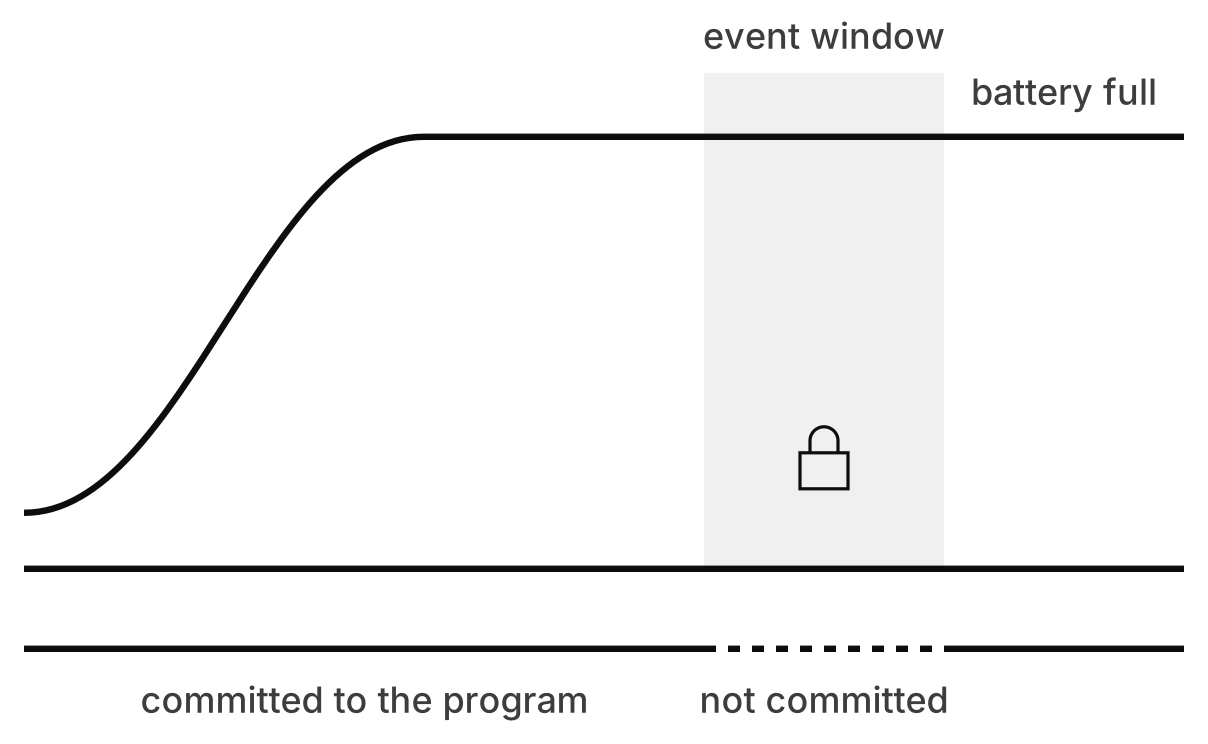
What programs pay for
Market rules and the contract decide which is on offer.
- Capacity made available during defined periods.
- Measured changes in demand or energy delivery.
- Other grid services that the equipment and program can support.
From equipment to payment
Each step depends on the one before it.
Check program and site eligibility.
Set responsibilities and terms.
Deliver the committed response.
Apply the program’s payment rules.
Evidence and settlement
A command record says what was requested and what happened. A program settlement establishes what is payable.
Common questions.
Is a payment guaranteed?
No. Payment depends on eligibility, availability, performance and the program's terms.
Does every battery qualify?
Qualification depends on the equipment, the site, the territory and the enrollment rules.
Can the owner opt out?
Participation and override rights must be set out in the relevant agreement and controls.
Can I estimate a return?
Use reviewed market assumptions and site data. A scenario is an illustration, not an offer or a guaranteed return.
Ask your assistant.
Explain this page from Elastic Energy in plain language: https://elasticenergy.com/what-is-dispatchable-revenue