
Flexibility as infrastructure
Demand response started as a reliability program. It is now becoming core infrastructure for how the grid operates.
Automation has changed what participation looks like. Large industrial loads, building systems, solar and storage assets, electric vehicles and residential devices can act as one coordinated resource. They can respond locally to price changes, frequency shifts or local constraints. Where programs allow it, participants can provide capacity support during peak demand, respond to price signals or deliver ancillary services.
The value stack
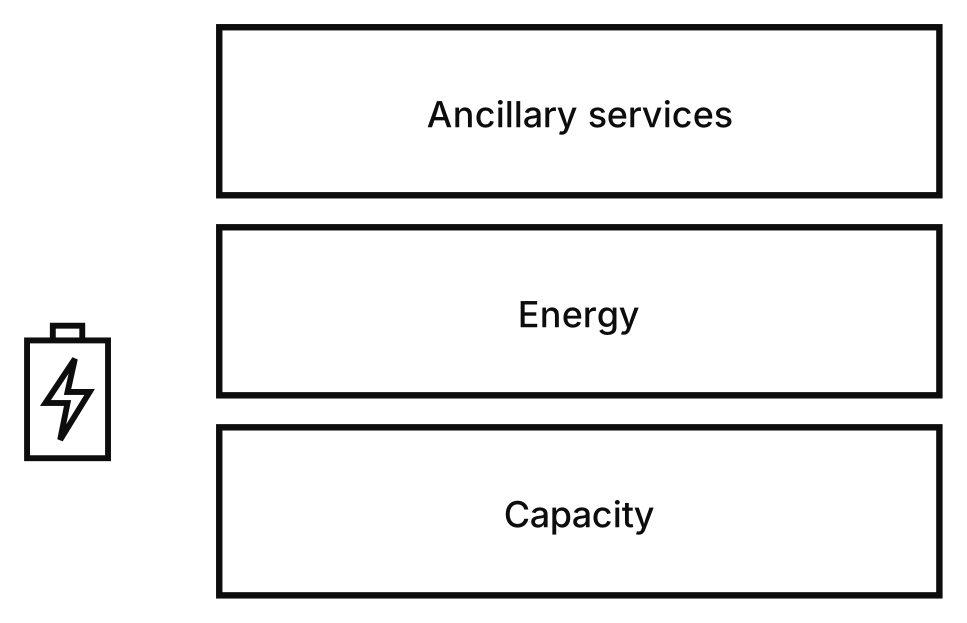
Modern demand response is a stack of programs, each paying for a different kind of response. Capacity programs reward readiness to reduce or shift load during system peaks. Energy programs pay for responding to short-term price signals. Ancillary services pay for precision and speed in maintaining grid stability.
Automation makes it possible to move between these roles. Devices can respond locally while coordinating as part of a larger portfolio, optimizing for both customer value and grid stability. When grid events occur, this flexible capacity can respond through DER flexibility.
Capacity from homes and small sites
Homes and small sites hold flexible capacity the grid can use. The Energy Router sits on site, reads batteries and solar inverters, and sends control instructions to batteries. Learn more about Virtual Power Plants.
Why control matters
Each connected device becomes more valuable as it becomes controllable. This is how the distributed energy market scales: through control, data and automation that create value for everyone involved.
Demand response is now about flexibility. It is the bridge between the physical grid and the digital systems that manage it.
Elastic's perspective
Elastic Energy's platform is built to make this level of coordination practical. It connects batteries and solar inverters to one platform.
As participation grows, flexibility becomes a core part of how energy is produced, delivered and consumed. Each step forward expands the foundation for new markets and faster, cleaner growth. Elastic is building the systems that make that possible.
Learn more about our approach, or start a project today. Interested in partnering? Let's talk.