
Readings to confirm
A short checklist shows gaps in a setup before control starts. Each reading answers a plain question about the equipment.
- Electrical power and its direction.
- Battery state of charge, meaning how full it is.
- Device operating state.
- Available controls and limits.
- Site and device connectivity.
- Measurement time and data freshness.
Read rate and timestamps
The rate you need follows from the control task. A timestamp says when a value was measured, which differs from how fast a screen refreshes. Sampling is how often a device measures, and delivery is how often the data arrives.
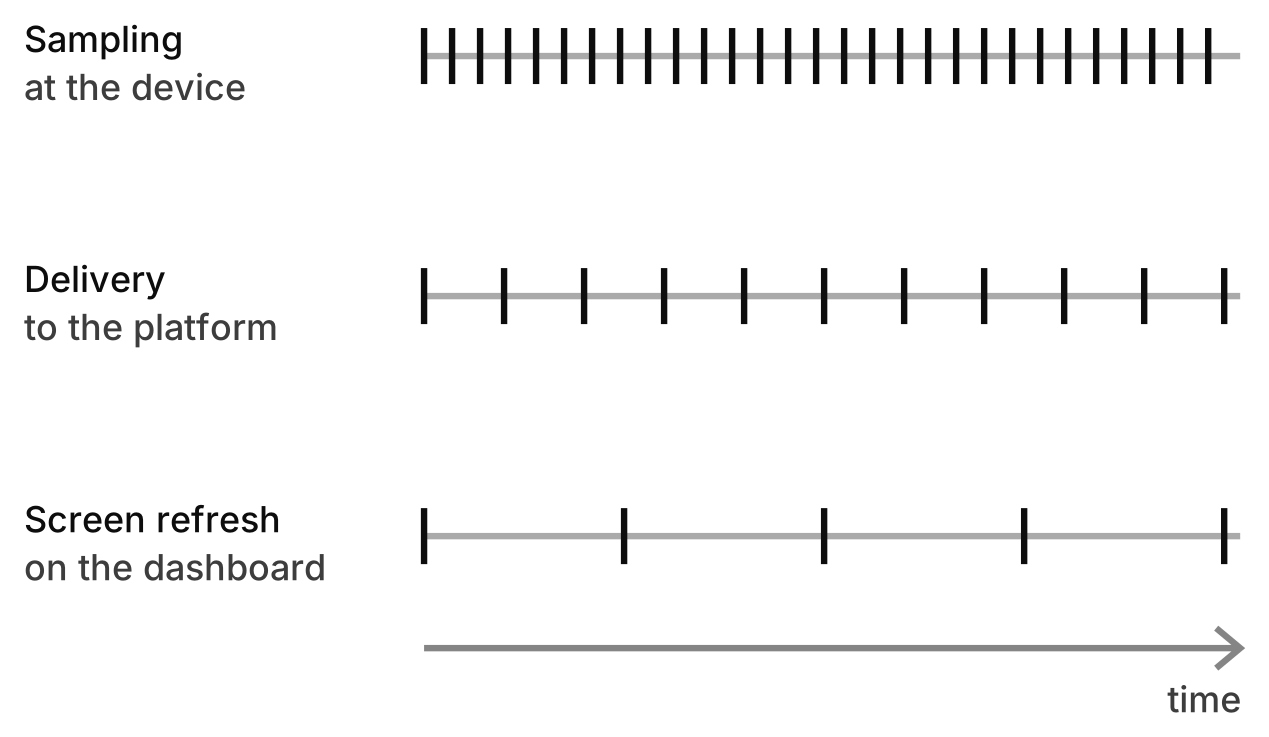
Where readings are taken
A local connection can expose device readings without a remote dashboard.
Acceptance checks
Test readings instead of assuming them. Write down the expected signals, units, sign conventions and acceptable data age. A sign convention is the rule for which direction counts as positive.
Common questions.
Does every device expose every signal?
Signals vary by device. Look up the exact model.
What happens to stale data?
The integration must define how stale or missing measurements affect control and reported availability.
Where do we validate readings?
During commissioning and the pilot tests.
Ask your assistant.
Explain this page from Elastic Energy in plain language: https://elasticenergy.com/der-telemetry-requirements